
Bitcoin (COIN: $BTC) staged a strong recovery in early March 2026, climbing past $73,000 after a brief dip triggered by the Iran conflict. The cryptocurrency briefly fell to around $63,000 on February 29 amid heightened geopolitical tensions, but quickly reversed course as institutional demand through spot ETFs overwhelmed short positions and renewed buying pressure.
The weekend escalation in the Middle East, including joint airstrikes on Iranian targets and reports of leadership losses, initially rattled risk assets. Bitcoin dropped sharply from pre-strike levels near $67,000–$68,000, hitting lows around $63,000 as traders priced in potential broader conflict and risk-off flows.
Oil prices spiked, and traditional markets faced volatility, but the crypto reaction proved short-lived. Within days, BTC reclaimed key levels, pushing above $70,000 and extending gains toward $73,000–$74,000 by March 4–5.
On-chain metrics showed temporary exchange inflows during the fear phase, but these normalized rapidly without sustained distribution. The price action followed a familiar pattern: geopolitical headlines cause knee-jerk selling, but absent escalation, Bitcoin reverts to its underlying trend.
ETF Inflows Drive the Rally
U.S.-listed spot Bitcoin ETFs played an important role in the rebound. After weeks of outflows earlier in 2026 (cumulative redemptions of several billion), inflows surged dramatically:
- Multiple days saw $400–$500 million+ net buys, with totals exceeding $1 billion over short stretches.
- BlackRock’s IBIT led consistently, often accounting for 50–66% of daily inflows.
- Other major players like Fidelity and Grayscale contributed significantly.
These institutional purchases absorbed selling pressure and triggered short liquidations in derivatives markets. Funding rates had flipped negative during the dip (indicating heavy short additions), but the rally forced covering, accelerating the move higher. Analysts noted this wasn’t purely a short squeeze; persistent ETF demand signaled real allocation shifts, with Bitcoin increasingly viewed as a geopolitical hedge alongside its digital gold narrative.
Technical Levels and Market Sentiment
The $70,000 zone acted as critical support and a pivot point. Bitcoin retested and held it before breaking higher, with momentum indicators turning bullish on the rebound. Resistance near $74,000–$75,000 looms as the next target if inflows remain robust.
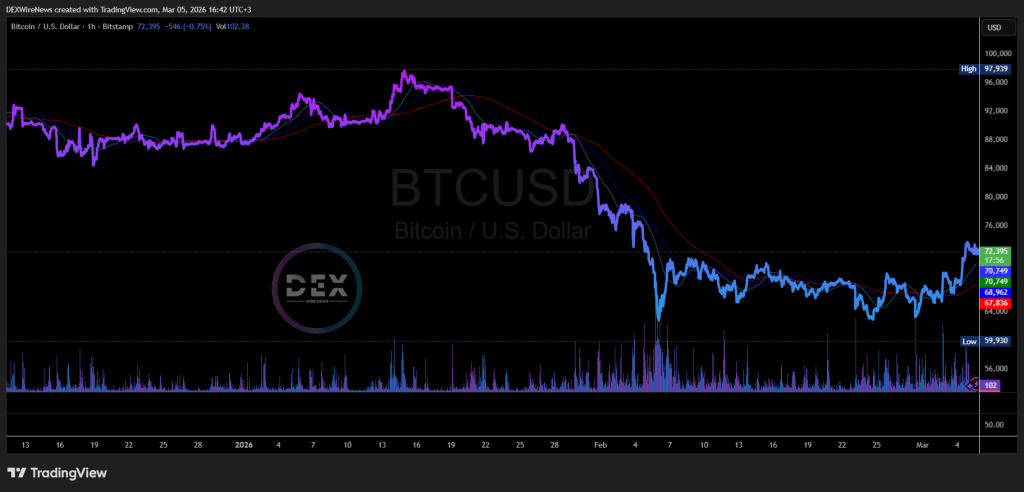
Sentiment has shifted from extreme fear to cautious optimism. While the Iran situation remains unresolved and oil volatility persists, contained escalation has eased immediate macro risks. Institutional conviction through ETFs provides a floor, but renewed tensions or broader risk-off moves could pressure prices back toward $65,000–$68,000.
Broader Implications for Crypto
This episode reinforces Bitcoin’s maturing resilience: short-term shocks from headlines cause volatility, but structural demand (ETFs, corporate treasuries) limits downside and fuels recoveries. If inflows continue and geopolitical risks de-escalate, bulls could target higher levels; persistent conflict or macro headwinds (e.g., Fed policy shifts) pose downside risks.
For now, Bitcoin’s quick shake-off of Iran fears highlights its evolving role as both a risk asset and a crisis hedge.
Click Here for Updates on BTC – It’s 100% FREE to Sign Up for Text Message Notifications!
Disclaimer: This website provides information about cryptocurrency and stock market investments. This website does not provide investment advice and should not be used as a replacement for investment advice from a qualified professional. This website is for educational and informational purposes only. The owner of this website is not a registered investment advisor and does not offer investment advice. You, the reader / viewer, bear responsibility for your own investment decisions and should seek the advice of a qualified securities professional before making any investment. Please read our Full Disclaimer: https://dexwirenews.com/disclaimer/