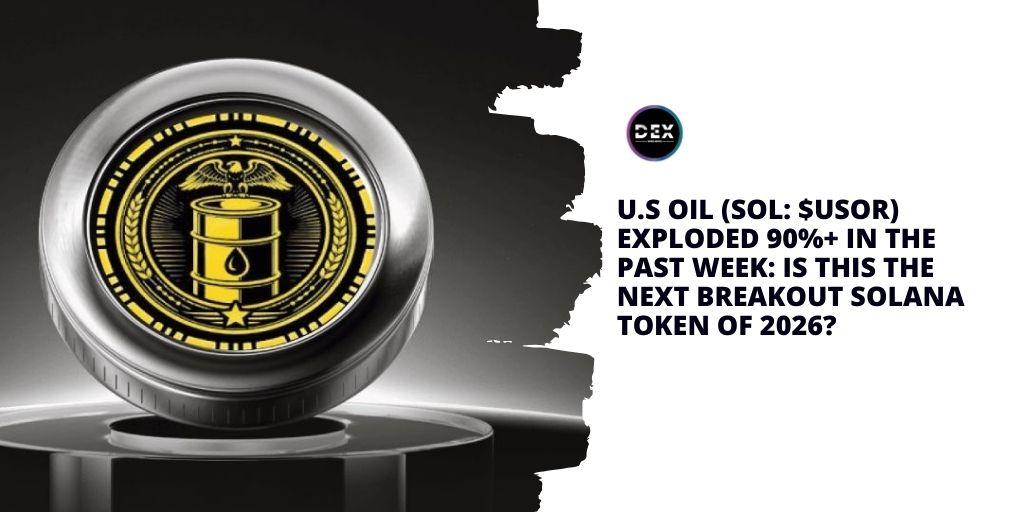
US Oil (SOL: $USOR) is a Solana-based SPL token designed to represent exposure to oil-related reserves through blockchain technology. Instead of traditional energy investments like ETFs, futures, or oil company stocks, USOR offers a purely crypto-native alternative that can be traded on decentralized exchanges at any time.
In theory, the idea is compelling. Tokenization has already transformed dollars through stablecoins and is increasingly moving into real-world assets such as real estate, bonds, and commodities. Oil seems like a logical next step. That narrative is largely what sparked the token’s rapid rise.
Inside the United States Oil Reserve (USOR) Token
Oil prices are volatile again. Geopolitical tensions are rising. Sanctions, supply disruptions, and political standoffs are pushing energy markets back into the spotlight.
And right in the middle of that macro chaos, a small Solana token with a big name has suddenly captured traders’ attention.
It’s called United States Oil Reserve (USOR), and depending on who you ask, it’s either the future of tokenized commodities or just another narrative-driven crypto play riding headlines.
Over the past few weeks, USOR has surged dramatically, at one point climbing more than 600% as retail traders piled into what many believed was a blockchain-backed way to gain exposure to U.S. oil reserves. The pitch is simple and powerful: bring oil onto the blockchain, make reserves transparent, and allow anyone to trade energy exposure 24/7 without brokers or futures contracts.
Why USOR Suddenly Took Off
The timing couldn’t have been better for speculation. Oil markets have been rattled by ongoing disputes involving Venezuela, sanctions-related supply constraints, and broader global tensions. Energy prices have become more sensitive to political headlines, and investors are actively looking for ways to hedge volatility.
At the same time, Solana has re-emerged as a hotbed for fast-moving tokens and high-volume decentralized trading. USOR sits right at the intersection of those two trends.
The result has been strong liquidity, millions in daily trading volume, and a fast-growing holder base. For many traders, the token became a simple macro bet: if oil narratives heat up, USOR might run. And it did.
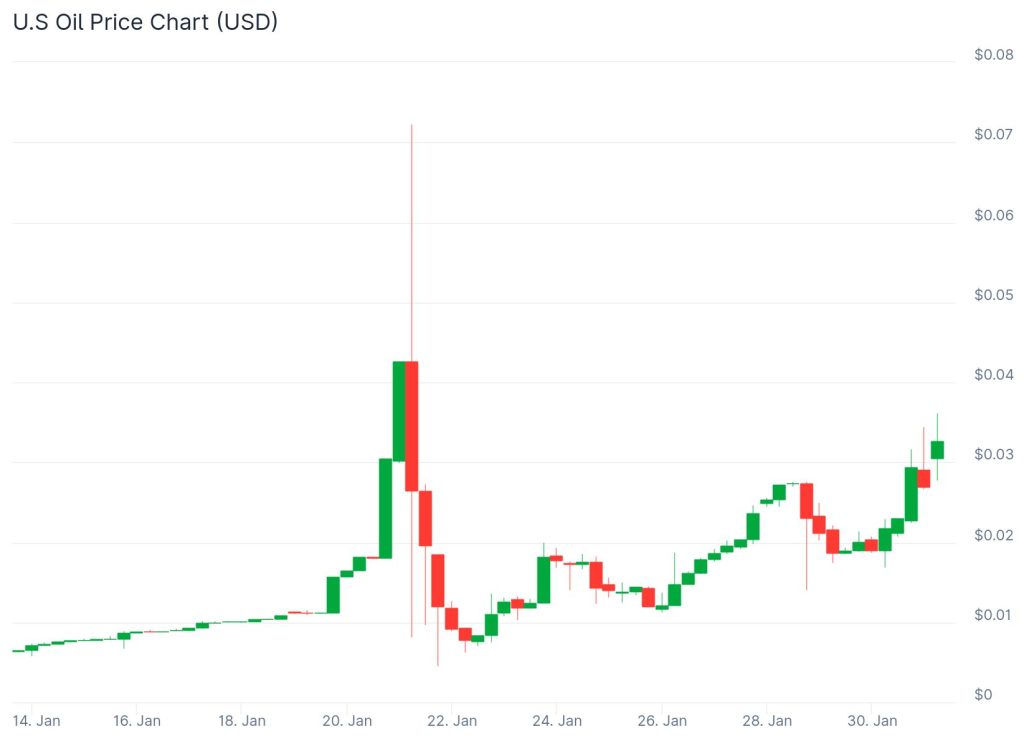
Over the past week, the price of $USOR tokens surged 99.9% to $0.03471, surging 61.4% in the past 24 hours alone as of Saturday, 31 January 2026. It has a 24-hour trading volume of $15.57 million, and a total market cap of $34.71 million. Since its all-time high price of $0.07219 on January 21, 2026, the price has dipped 53.9%.
The Key Detail Most Traders Miss
Despite the official-sounding name, USOR is not affiliated with the U.S. government or the Strategic Petroleum Reserve. This is where confusion often starts.
The project references oil reserves and transparency, but there is currently no verified legal or financial link between USOR and any government-controlled oil assets. No federal agency has endorsed the token, and there is no formal confirmation that barrels of oil are being custody-backed or tokenized on-chain.
In other words, USOR is not a government-backed commodity token. It is an independent crypto project that uses an oil-themed narrative.
So What Exactly Are You Buying?
At its core, USOR behaves like most altcoins. There is a fixed supply of tokens minted on Solana, open trading on decentralized exchanges, and full on-chain visibility into wallets and transfers. That transparency is real. The blockchain data can be verified by anyone. What remains less clear is whether the “reserve” component goes beyond branding and dashboards.
For now, the token’s price appears to be driven primarily by sentiment, trading activity, and macro energy headlines rather than any measurable link to physical oil assets.
That doesn’t mean the project can’t evolve into something more substantial. Real-world asset tokenization is growing fast across crypto. But today, USOR trades more like a speculative narrative token than a regulated commodity product.
The Opportunity and the Risk
For traders, USOR offers clear advantages. It provides around-the-clock access to an oil-themed asset without futures contracts or brokerage accounts. It’s fast, liquid, and easy to move between wallets or DeFi platforms. That flexibility is attractive, especially for global users who don’t have access to traditional markets.
But those benefits come with equally clear risks. The token is highly volatile. Large price swings are common. There is no formal auditing structure yet proving reserve backing. Regulatory uncertainty around commodity-linked tokens could emerge in the future. And like many story-driven assets, momentum can disappear just as quickly as it arrives.
Is USOR A Buy in 2026
USOR is an interesting experiment at the crossroads of commodities and crypto. The concept of tokenized oil exposure makes sense. On-chain transparency is a positive step. And Solana’s speed makes the user experience frictionless.
But today, the token is still more narrative than infrastructure. If the team eventually delivers verified proof-of-reserves and credible audits, USOR could mature into a legitimate real-world asset product. Until then, it trades like a high-beta crypto play tied loosely to energy headlines.
For now, think of USOR less like an oil ETF and more like a speculative altcoin with an oil story attached. As always in crypto, narratives create the rally. Fundamentals decide what lasts. As such, adding $USOR to your portfolio could potentially be a great short-term play.
Click Here for Updates on USOR – It’s 100% FREE to Sign Up for Text Message Notifications!
Disclaimer: This website provides information about cryptocurrency and stock market investments. This website does not provide investment advice and should not be used as a replacement for investment advice from a qualified professional. This website is for educational and informational purposes only. The owner of this website is not a registered investment advisor and does not offer investment advice. You, the reader / viewer, bear responsibility for your own investment decisions and should seek the advice of a qualified securities professional before making any investment. Please read our Full Disclaimer: https://dexwirenews.com/disclaimer/