

Bitcoin ETFs (COIN: $BTC) saw approximately $697 million in net inflows on the second trading day of 2026, a strong sign that institutional and large investors are returning to the crypto market early in the year. This level of inflow so early in the calendar suggests renewed confidence among big money managers and could influence how Bitcoin performs in the weeks ahead.
This headline comes at a time when Bitcoin’s price action has been mixed, with key resistance levels near $90,000–$95,000 still proving difficult to sustain. The ETF inflows, largely into U.S. spot Bitcoin ETFs, provide a fresh data point showing that demand has not dried up after the strong 2025 rally.
This is notable because Bitcoin ETF flows have been a major driver of price moves since regulatory approval in the U.S. in 2024.
ETF Flows Tell Us Something Important
Net inflows of nearly $700 million in a single day are not trivial for financial products the size of Bitcoin ETFs. These products hold billions in assets under management (AUM), but significant inflows early in the year often signal a renewed interest from institutions, wealth managers, and large funds, which view BTC as part of their strategic allocation for 2026.
These flows may reflect anticipation of macro catalysts such as potential interest rate changes, inflation data, or continued integration of Bitcoin in institutional portfolios. ETF flows often act before price moves, so watching weekly cumulative flows, not just daily, is crucial.
While retail participation still matters, institutional flows tend to move networks of capital that can influence liquidity, market depth, and volatility. Earlier in 2025, strong Bitcoin ETF inflows helped support the rally toward all-time highs, and the renewed activity suggests some traders believe that trend may continue.
Price Context: Bitcoin’s 2026 Start
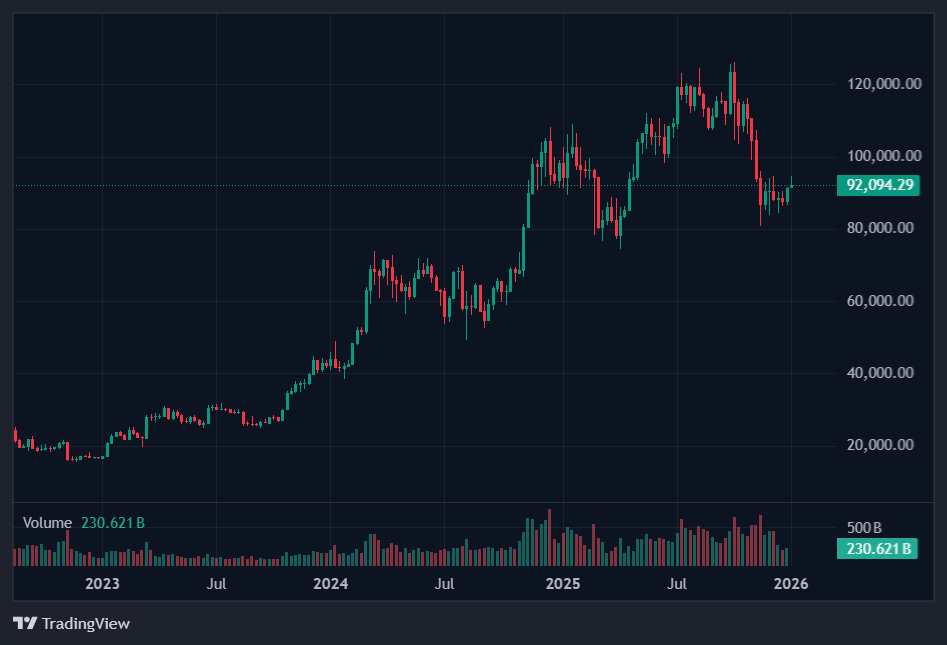
Bitcoin began 2026 with a slightly bullish tone but faced resistance near key supply zones. After rallying toward $95,000 in late 2025, gains stalled and price consolidated, a normal process after a multimonth move.
Early 2026 flows, like this ETF influx, can act as fresh demand signals that offset short-term selling pressure from profit-taking.
Despite the inflows, the price still sits near key supply zones that were tested repeatedly at year-end. This setup means markets are watching for breakouts above $95,000 with real conviction, measured by higher volume and steady bids, before declaring a new uptrend.
Why This Flow Matters: Beyond the Numbers
There are several reasons why nearly $700 million in ETF inflows in early 2026 matters:
One, it shows that institutional money is not just watching from the sidelines. Spot Bitcoin ETFs draw capital from big funds that would otherwise allocate to stocks, bonds, or commodities; inflows represent active reallocation into crypto as a strategic asset.
Two, in periods where spot liquidity is thinner (like early January), ETF flows can become a dominant driver of price moves, especially as block trades and institutional allocations are factored in.
Three, steady inflows early in the year help set a narrative for year-long allocation. Many macro funds and endowments do annual reviews in January and may adjust exposure based on risk/reward preferences shaped by flows like this.
These dynamics matter because Bitcoin lacks traditional earnings or cash flows, but it does trade as a liquid asset influenced by large flows, sentiment, and macro expectations. Inflows of this size suggest investors still see value even after a major rally.
Technical Analysis: What the Charts Are Telling Us
From a technical perspective, Bitcoin remains at a critical juncture. Price has consolidated after testing resistance near $90,000–$95,000 for several weeks. The key questions now are:
- Can Bitcoin hold above major support levels on pullbacks?
- Will volume confirm another push higher?
Support levels to watch:
- Around $85,000–$88,000, recent swing lows
- Below that, $80,000–$82,000, deeper support zone that protected the price in late 2025
Resistance levels:
Near $90,000–$95,000, where supply pressure increased, above that, $100,000, a psychological level that could act as a magnet if buyers return
Momentum indicators like the Relative Strength Index (RSI) are showing signs of neutral to mildly bearish bias, meaning the market hasn’t fully recovered momentum after the late-2025 run. Traders often look for an uptick in RSI along with stronger volume if another breakout attempt begins.
Volume patterns matter here: a breakout with low volume can lead to a false move, while a break on high, sustained volume suggests deeper conviction from both retail and institutional buyers. Because ETF flows are large by nature, observing how the price reacts in conjunction with these flows is crucial.
How This Could Shape Trades Outlook
ETF flows are often a leading indicator for market positioning. If inflows continue over the next few weeks rather than just appearing as a single data point, it could signal stronger structural demand, which may help fuel a sustained push above resistance zones.
Conversely, if flows stall or flip to outflows, it would suggest that the temporary inflows represented one-off rebalancing or short-term allocation adjustments rather than long-term conviction.
The broader macro backdrop, such as Federal Reserve policy, risk appetite in equities, inflation data, and geopolitical confidence, will also influence whether these flows translate into real price moves.
Thus, while one day of large ETF inflows does not guarantee an uptrend, it adds a powerful element of demand at a time when Bitcoin needs fresh catalysts.
Conclusion
Bitcoin spot ETFs attracted about $697 million in net inflows on the second trading day of 2026, an early sign that institutional demand may be returning after the strong performance of late 2025. These flows matter because they represent serious capital allocations, not just short-term trades.
From a price perspective, Bitcoin remains at key technical levels, testing supply zones that have resisted earlier rallies. The combination of institutional capital flows and technical chart behavior suggests that the early 2026 narrative for Bitcoin is still very much being written.
Investors and traders should watch whether ETF inflows continue and how the price responds around critical support and resistance levels. Continued flow strength could help Bitcoin build a foundation for renewed upside, while weak or negative flows might slow momentum and keep prices in a broader consolidation phase.
Click Here for Updates on BTC – It’s 100% FREE to Sign Up for Text Message Notifications!
Disclaimer: This website provides information about cryptocurrency and stock market investments. This website does not provide investment advice and should not be used as a replacement for investment advice from a qualified professional. This website is for educational and informational purposes only. The owner of this website is not a registered investment advisor and does not offer investment advice. You, the reader / viewer, bear responsibility for your own investment decisions and should seek the advice of a qualified securities professional before making any investment. Please read our Full Disclaimer: https://dexwirenews.com/disclaimer/