

The Nasdaq Composite just closed out its weakest month since March, ending a seven-month winning streak and raising fresh questions about whether the long-running bull market is losing momentum or simply taking a breather.
Despite the setback, new historical research suggests that this pullback may be only a small interruption in what could still evolve into a powerful multi-year rally.
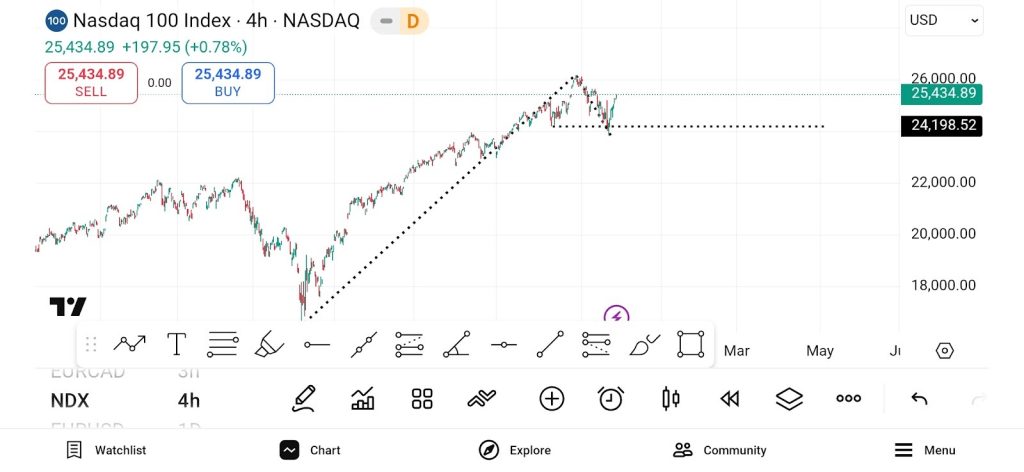
According to newly analyzed data, the Nasdaq Composite slipped 1.5% in November, a meaningful reversal after months of substantial gains powered by the AI boom, major tech earnings beats, and resurgent investor confidence. This decline marks the index’s first monthly loss since early spring and comes at a time when valuations, especially across the Nasdaq-100, have entered levels unseen in almost two decades.
While the red month has put investors on edge, market historians argue that this type of pause is not only normal but often healthy during early-stage bull markets. Research from Nasdaq.com shows that since 1990, the typical Nasdaq bull cycle has delivered an average total return of 281% over roughly five years.
By comparison, the current bull market, which began from the lows earlier this year, is only up about 53%. If history holds true, the current rally may barely be getting started.
Data Performance
But the data also comes with a warning. The Nasdaq-100 is now trading near 35 times earnings, far above its long-term average of 26 times. This valuation gap has widened quickly as investors rushed back into tech, AI, semiconductor, and cloud stocks. High valuations do not automatically end bull markets, but they do create fragile conditions. Any weak earnings report, slowdown in AI spending, or hawkish signal from the Federal Reserve could trigger sudden corrections.
Recent movements in market structure show signs of this fragility. Breadth has tightened, leadership has narrowed, and several key moving-average trends, which had been strong all year, have now weakened.
These are early indicators that the market may enter a choppier phase before resuming any upward trend. Still, none of these signals point to a confirmed reversal. Rather, they suggest the bull market may undergo resets, consolidations, and shakeouts similar to earlier cycles.
Despite the noise, long-term investors may find the current moment more opportunistic than alarming. Historically, every Nasdaq bull market has included multiple pullbacks, pauses, and corrections, yet the overall long-term direction remained upward. If the past three decades are any guide, the market tends to reward patience more than perfection.
With economic conditions still steady, interest-rate cuts expected in early 2026, and AI-driven revenues continuing to strengthen the tech sector, the broader outlook remains constructive. However, the gap between “constructive” and “overheated” is narrowing, leaving investors to balance opportunity with discipline.
Should You Invest $1,000 in the Nasdaq Composite Right Now?
For long-term investors, the answer leans toward yes, but with a solid strategy.
The recent drop offers a lower entry point compared to the peak levels seen earlier this year. If the current bull market follows historical patterns, investors entering now have the potential to ride a multi-year expansion phase.
But the elevated valuations suggest that the market may not move in a straight line. Dollar-cost averaging, spreading investments over time, may be a smarter approach for anyone wary of short-term turbulence.
In simple terms, the opportunity remains, but caution is justified.
Market Outlook
The next direction for the Nasdaq will depend heavily on several factors:
• Whether the Federal Reserve signals rate cuts earlier than expected
• How AI and semiconductor companies guide 2026 earnings
• Market breadth — whether more stocks begin to participate in the rally
• Economic data, especially inflation and consumer demand
If these indicators remain supportive, November’s drop may go down as a short-term hiccup rather than the start of a prolonged downtrend.
Conclusion
The Nasdaq’s worst month since March has stirred anxiety among investors, but history shows that one red month rarely defines an entire market cycle.
While valuations remain high and volatility is returning, the broader backdrop still resembles the early stages of a long-term bull market. Investors who stay disciplined and avoid emotional decisions may find themselves rewarded in the years ahead.
Click Here for Updates on Nasdaq – It’s 100% FREE to Sign Up for Text Message Notifications!
Disclaimer: This website provides information about cryptocurrency and stock market investments. This website does not provide investment advice and should not be used as a replacement for investment advice from a qualified professional. This website is for educational and informational purposes only. The owner of this website is not a registered investment advisor and does not offer investment advice. You, the reader / viewer, bear responsibility for your own investment decisions and should seek the advice of a qualified securities professional before making any investment. Please read our Full Disclaimer: https://dexwirenews.com/disclaimer/