Gold (GC=F) is doing the opposite of what many investors would normally expect during a major Middle East conflict. Instead of extending its safe-haven rally, the metal has been sliding sharply as markets focus less on fear itself and more on what the Iran war could mean for inflation, interest rates, and the U.S. dollar. Gold has been hit by a mix of rising oil prices, a more hawkish rate outlook, and broad profit-taking after a huge run higher earlier this year.
Why Gold Is Falling
The key reason is that this conflict is being treated by markets as an inflation shock, not just a geopolitical shock. Iran’s blockade of the Strait of Hormuz and broader attacks tied to the conflict have pushed oil higher, which has revived worries that inflation could stay hotter for longer. Gold tends to benefit when investors expect lower rates and easier monetary policy, but it can struggle when war-driven energy spikes make central banks more cautious.
In short, the market is repricing the macro fallout from that risk. Higher oil can feed into transportation, fuel, and consumer prices, which reduces confidence that the Federal Reserve will cut rates soon. After the Fed held rates steady and signaled continued inflation concerns, traders are less willing to chase a non-yielding asset like gold at elevated prices.
The Dollar Is Winning
Another major factor is the US dollar. In many crisis periods, both gold and the dollar can attract defensive flows, but right now the dollar appears to be drawing the stronger bid. A firmer dollar makes gold more expensive for buyers using other currencies, which can cool demand at the margin. At the same time, rising Treasury yields improve the relative appeal of interest-bearing assets versus gold, which pays no income.
There is also a positioning element. Gold had already staged a massive rally before this latest selloff, so part of the move looks like investors locking in gains. There has also been a cooling in ETF demand, hedge-fund repositioning, and broader liquidation across metals as volatility increased. Even traditional hedges can get sold as traders raise cash or reduce risk.
Gold Price Performance
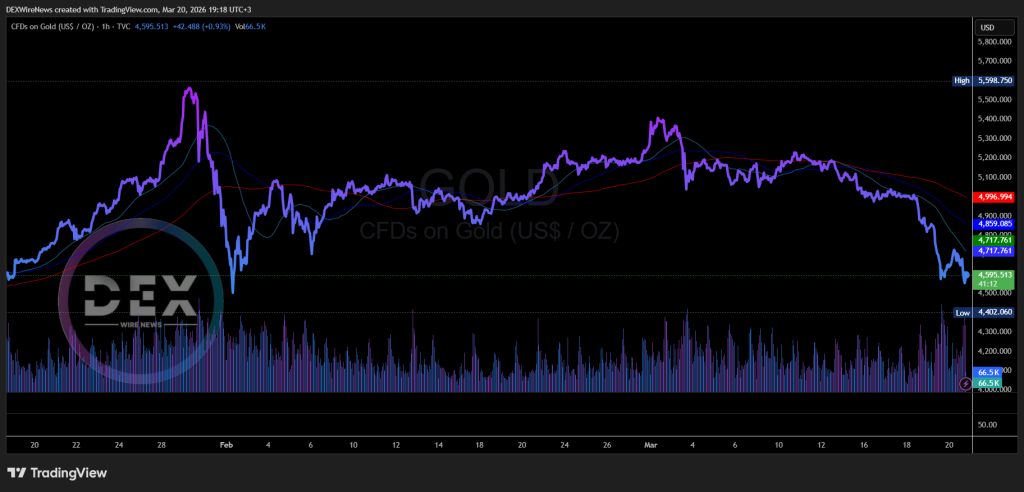
The recent drop has been significant. Spot gold sat at about $4,566.26 per ounce on Friday, March 20, with April US gold futures around $4,570.20. Gold has fallen more than 10% from its late-February war-period highs and well below its January peak near $5,626.80. This represents one of gold’s sharpest weekly drops since the early pandemic period, showing just how aggressively the market has repriced the metal over the past several sessions.
Is Now The Time To Buy Gold?
For short-term traders, gold may remain volatile because the same forces pressuring it now, namely oil-driven inflation fears, a strong dollar, and high yields, have not fully disappeared. If the Iran conflict drags on and keeps energy markets tight, rate-cut hopes could stay under pressure, which would make it harder for gold to stage a clean breakout.
For longer-term investors, however, this pullback may start to look more interesting. Even after the selloff, gold remains far above year-ago levels and still sits within a much bigger structural uptrend. If inflation stays sticky, fiscal pressures remain high, and geopolitical instability continues, the longer-term case for owning some gold is not broken. The real question is whether investors want to buy into near-term volatility now or wait for clearer evidence that the dollar and yields are losing momentum.
On balance, gold’s decline does not necessarily mean the safe-haven thesis has failed. It means the market is currently prioritizing dollar strength and rate expectations over fear alone. That can create pain in the short run, but it can also create opportunity for investors who still believe the broader macro backdrop remains favorable for bullion.
Click Here for Updates on Gold – It’s 100% FREE to Sign Up for Text Message Notifications!
Disclaimer: This website provides information about cryptocurrency and stock market investments. This website does not provide investment advice and should not be used as a replacement for investment advice from a qualified professional. This website is for educational and informational purposes only. The owner of this website is not a registered investment advisor and does not offer investment advice. You, the reader / viewer, bear responsibility for your own investment decisions and should seek the advice of a qualified securities professional before making any investment. Please read our Full Disclaimer: https://dexwirenews.com/disclaimer/