

U.S. energy exchange-traded funds (ETFs) are drawing renewed investor attention as forecasts from the U.S. Energy Information Administration (EIA) suggest that natural gas prices could decline in 2026 before rebounding sharply in 2027.
According to EIA’s updated Short-Term Energy Outlook, benchmark Henry Hub natural gas prices are expected to average just under $3.50 per million British thermal units (MMBtu) this year, slightly lower than 2025 levels amid oversupply concerns and warm weather that has curbed heating demand. However, the same outlook projects a powerful rebound of more than 30% in 2027, with prices approaching $4.60/MMBtu, creating a potential entry point for long-term investors.
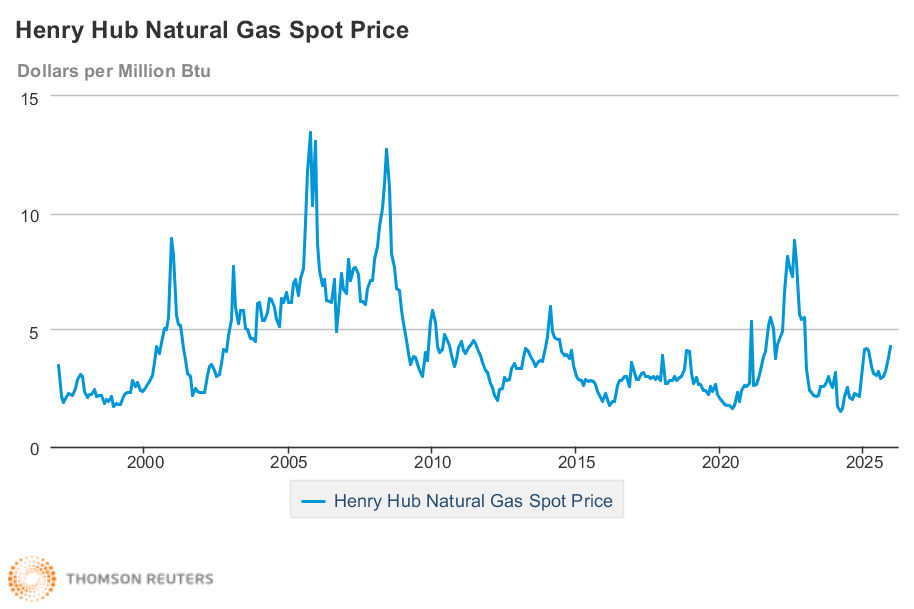
This dynamic, a near-term lull followed by an anticipated surge, has put broad energy ETFs like the State Street Energy Select Sector SPDR ETF (XLE), Vanguard Energy ETF (VDE), and Fidelity MSCI Energy Index ETF (FENY) in the spotlight as strategic vehicles for exposure.
These funds hold major energy companies with natural gas and oil operations that may benefit if natural gas rebounds in the longer term, while also providing diversification across the broader energy sector.
Why Natural Gas Prices May Slip Before Recovery
Several factors underpin the EIA’s projection of softer natural gas prices in 2026. An unusually warm start to the year in the United States has dampened residential and commercial heating demand, allowing inventories to accumulate and reducing near-term pricing pressure.
Production growth in the U.S. is expected to outpace demand growth, helping keep prices subdued even as overall consumption remains robust. Temporary operational slowdowns at key LNG export terminals have also limited overseas demand, leaving more supply in the domestic market and contributing to downward pressure.
Despite these near-term headwinds, the outlook for 2027, and potentially beyond, appears more bullish, according to the EIA.
As export capacity expands and demand from power generation and industrial use rises, natural gas pricing fundamentals could tighten, giving energy ETF holders potential upside after the current soft patch.
What Energy ETFs Offer Investors
Energy ETFs provide a diversified way to participate in the energy sector without needing to pick individual stocks. For example, XLE’s top holdings typically include integrated majors like ExxonMobil and Chevron, while VDE and FENY broaden exposure to dozens of firms involved in exploration, production, and services.
These ETFs have delivered gains over the past year and may continue to attract capital if investors decide to buy the dip in gas prices while positioning for a later upward trend.
While pure natural gas futures and leveraged products can offer more direct exposure, they also carry significant volatility. Energy ETFs smooth these risks by holding baskets of companies with diverse revenue streams, including oil and gas production, refining, and midstream operations, which can help buffer performance in periods when one commodity’s price lags others.
How Broader Energy Trends May Influence 2026 and Beyond
Beyond natural gas, the broader energy space shows mixed signals heading into 2026. The EIA expects overall U.S. power consumption to reach near-record highs, with natural gas usage for electricity production poised to stay significant even as renewable shares grow. This suggests that energy demand fundamentals remain intact, lending structural support to energy equities and ETFs despite short-term price weakness.
At the same time, analysts are tracking potential oversupply issues in crude oil markets that could weigh on energy equities more broadly, and geopolitical developments, such as export capacity shifts and large asset deals by major trading houses, could reshape supply dynamics in unexpected ways.
Investor Takeaway: Positioning for Potential Rebound
The current outlook paints Henry Hub natural gas prices entering a “valley” in 2026 before a likely recovery into 2027. For investors, this may present an opportunity to accumulate diversified energy exposure now via ETFs like XLE, VDE, and FENY, which are structured to benefit from eventual commodity price improvements as well as stable cash flows from integrated energy firms.
As always, timing and risk management matter: natural gas prices can be heavily influenced by weather patterns, inventory levels, and production changes, making energy ETFs a tactical tool rather than a pure directional bet.
Click Here for Updates on Energy ETFs – It’s 100% FREE to Sign Up for Text Message Notifications!
Disclaimer: This website provides information about cryptocurrency and stock market investments. This website does not provide investment advice and should not be used as a replacement for investment advice from a qualified professional. This website is for educational and informational purposes only. The owner of this website is not a registered investment advisor and does not offer investment advice. You, the reader / viewer, bear responsibility for your own investment decisions and should seek the advice of a qualified securities professional before making any investment. Please read our Full Disclaimer: https://dexwirenews.com/disclaimer/